
Christ vs. Dionysus: On the Christian Orientation towards Life and Becoming
A response to G. P. Xavier's Dionysian challenge. On Christianity, the affirmation of life, and the meeting of Christ and Dionysus.

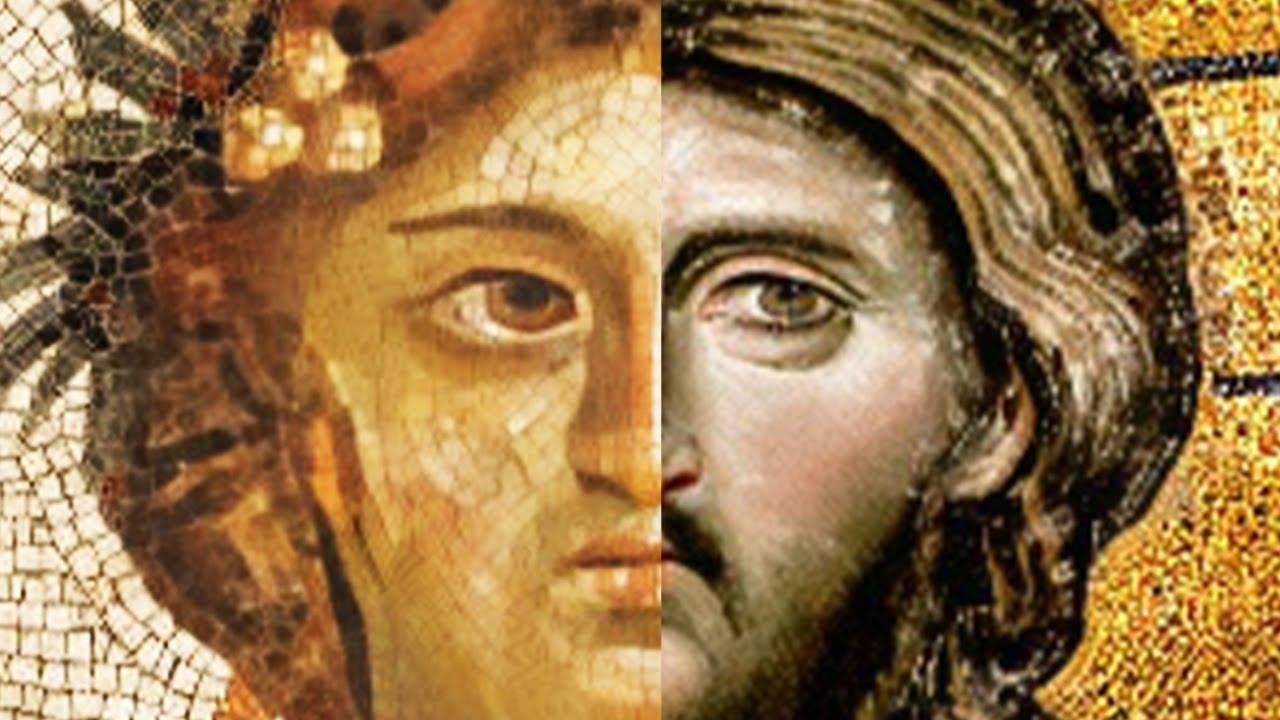
“Dionysus cut to pieces is a promise of life: it will be eternally reborn and return again from destruction.”
— Friedrich Nietzsche, The Will to Power
The Challenge of Dionysus
One of the most important philosophical debates of our time is that of Christ vs. Dionysus. The votaries of the latter contend for a radical affirmation of life. What is more, they insist on affirming life as it is, and not a life deferred to some time in the remote future, for which the earnest believer hopes under the name of “eternal life,” a species of life entirely heterogeneous to that which we have experience of in our present mortal bodies. Of this eternal life St. Paul testifies when he writes: “Eye hath not seen, nor ear heard, neither have entered into the heart of man, the things which God hath prepared for those who love him” (1 Cor. 2:9). So enticing was the promise of a life beyond the grave, beyond the bounds of this mortal life with its sundry ills and innumerous sorrows, that many a soul embraced the new religion with great fervency. For almost two millennia, countless persons harbored the hope of a life beyond, endured their hapless lot, expectant of a greater reward.
In the case of some, the zeal for acquiring this eternal life reached such a feverish pitch that they abandoned the world and renounced all its goods; a vow was made to live a harsh and austere life. Difficult though it were, they undertook this grave affair with a child-like joy in their belief that the good Lord shall return them a hundredfold of all that had been given up for His sake. And so the pious sound of the psalms of these aspirants for the life of the age to come resounded throughout the halls of many a medieval monastery. Hermits, having abandoned even the company of men, uttered their solemn prayer of desperation to God for the grace that they might be granted admission to the kingdom of eternal bliss.
At first glance, it would seem that the life of a Christian is that of a life deferred, and such is the claim of many modern acolytes of Dionysus. The Christian shirks from life, which he considers to be a reality fallen from some primordial Edenic state, to which we shall return in the eschaton. Perhaps, the Christian affirms the world but with a condition: the world is to be redeemed. It is imperfect, he cannot accept it how it is. The suffering he endures is ultimately a result of sin and as such represents some accidental accretion to reality that is to be done away with at the second parousia.
On the contrary, the Dionysian proffers a radical embrace of becoming; he rejects – or is at least agnostic of – the static future of what allegedly constitutes eternal life. As we have already said, he accepts life as it is. He embraces his fate – both weal and woe. While the fundamental orientation of his being is primarily that of joy, nonetheless he considers suffering to be an integral part of life. The sea of becoming is in a perpetual state of ebbing and flowing. Such is its natural rhythm. The Dionysian adept revels in this eternal cycle of joy and suffering. He knows that the former cannot be truly enjoyed without enduring the latter. Dionysian life is that of radical acceptance of the world of becoming, for life as it is, and more particularly that of his own life. The Dionysian man continually cultivates a love of his own fate, an amor fati.
Christianity and the Affirmation of Life
True Christianity radically affirms life as it is. I have already made use of the phrase “as it is” several times. My use of this qualification has been an intentional reference to a very intriguing YouTube video produced by G. P. Xavier entitled Jordan Hall’s Dionysian Christianity[1] and likewise a discussion of the video I had with 𝐀𝐋𝐋𝐇𝐄𝐀𝐑𝐓 and Krug on our weekly podcast, the Take Heart Podcast. It is not my pretension to write a response that would necessarily satisfy Xavier, nor any self-styled Nietzschean, but merely to present what I believe to be the truth.
In his video, Xavier is nothing but irenic in his treatment of Christianity, from which is absent any trace of rancor or ressentiment. One cannot accuse him of straw-manning Christianity; he openly states that it is an unfair characterization of Christianity to say that it is in its essence a religion of ressentiment. Of course, there are many cases where the Christianity of particular Christians might be based in ressentiment, and certain aspects of Christianity certainly can lend themselves to ressentiment if interpreted in a particular manner. The main charge he lays at the foot of Christianity is quite different – he asks the question: can Christianity affirm life as it is?
By life as it is, Xavier means life as phenomenologically experienced by us in the world we inhabit. Many are this life’s joys and consolations, but just as numerous are its sorrows and afflictions. For the Dionysian, this ever-recurring cycle of weal and woe constitutes the natural rhythm of life; we cannot revel in life’s delights without simultaneously enduring its many trials and tribulations. Xavier concedes that Christianity does not reject suffering wholesale; in fact, the meaning of suffering occupies a central role in Christian theology. After all, is not the central theme of Christianity the vicarious death of Christ upon the cross? Moreover, St. Paul says of himself – and by extension of all other believers – that he “fills up what is lacking in Christ’s afflictions” (Col. 1:24). And Christ Himself calls upon His disciples to bear the heavy yoke of suffering when He bids all that would follow Him to “take up their cross and follow [Him]” (Matt. 16:24).
But what is the meaning of suffering in Christianity? Xavier contends that for Christianity the meaning of suffering is primarily redemptive or soteriological. Though suffering found its way into the world through sin and is as such an evil, nevertheless it can serve as an instrumental good, insofar as it leads to the greater good of salvation and growth in the virtues. To the extent, then, that suffering serves some salvific end, Christianity may affirm it. On this view, it is said that Christianity does not affirm suffering as some integral part of the world, but rather as an alien and invasive element repugnant to the world’s true nature. On such an account, suffering is affirmed only as something instrumental and, ultimately, transitory.
As a Christian, it would be unbecomingly contrarian of me to characterize the above account as false. Christianity indeed preached the coming of the Kingdom of Heaven, a kingdom – as Christ testified to Pontius Pilate – that is “not of this world” (Jn. 18:36). As for suffering, we are told that the creation has been “subjected to vanity, not willingly” and that it “groaneth and travaileth in pain together until now” (Rom. 8:20, 22); however, just as this unnatural state took its beginning from the primordial fall of man from grace, so likewise has Christian revelation prophesied of its term at the end of the age, when the Heavenly Jerusalem shall descend in its full glory. Then “the last enemy that shall be destroyed is death” (1 Cor. 15:26).
This is all true, as far as it goes, and it would be foolish to deny it in the hopes of appeasing the inveterately doctrinaire Nietzschean. Be that as it may, we do intend to answer the Nietzschean charge as to whether Christianity can affirm life as it is. With this in mind, we wish to put forward an understanding of Christianity that radically embraces life and becoming, not only as ideally envisioned either in some Edenic state long ago or in an eschatological state in the very remote future, but as it exists as given in our experience.
The first modest step we shall take towards such an interpretation of Christianity is accepting even the fallen aspects of life. Eckhart’s understanding of mortal sin represents the view we are trying to get across:
Yes, that man would indeed be established in God’s will who would not wish that the sin into which he had fallen had never been committed; not because it was against God, but since, through that, you are obliged to greater love, and, through that, brought low and humbled.[2]
Eckhart states that if one is “rightly placed in the will of God” – in a state of grace, as Catholic theology would have it – then one ought not to regret even his mortal sins, as they have served some role in forming the destiny that has made us who we are at present; even though mortal sin, considered in itself, is an evil, nevertheless it is a relative good in that it served to a greater end. So scandalous was Eckhart’s view at the time that it merited papal censure.
We may rightly extend this attitude not only to our conduct, but to all of life. All that has befallen us, whether weal or woe, is radically embraced as an integral part of our fate. This is a step in the right direction, but it may be objected that even what has been outlined here is nothing but a slightly more sophisticated instrumentalization of life, such as was critiqued above. Such a criticism would indeed be correct were we to rest satisfied with what has been written above, but we must go beyond even this.
The fundamental disposition to be embraced by the soul desiring to embrace the world of becoming and all its vagaries is that of Gelassenheit.[3] Its fundamental meaning consists in the habit of the soul whereby one simply “lets things be.” One allows the world of phenomena to be as is without subjecting it to imagined values, ideas as to what it should be. Such an attitude is not to be mistaken for indifference to the world; rather, the world is taken on its own terms.
Overcoming and Affirmation
The fundamental assumption of Xavier’s challenge seems to be that life as such can only be truly affirmed if it is the highest of values. But such a view is surely mistaken. Drawing on Aristotle, the Scholastics distinguished between so-called noble goods (bona honesta) and instrumental goods (bona utilia). The latter are valued only insofar as they serve as a means to a higher end, whereas the former are desired for their own sake. However, to be desired for its own sake is not to say that something represents the highest end or summum bonum. Something can be an end in itself without being the highest of all possible ends. Xavier’s challenge, however, seems to imply that in denying life as it is the status of being the highest value, Christianity cannot fully affirm it; and this would suggest that ends not constituting the highest end cannot be truly affirmed. Such a conclusion, however, is truly absurd. While maintaining that Christianity affirms life, we don’t believe it inconsistent to deny life the title of constituting the highest value.
It is the contention of Christianity that life’s most radical affirmation consists in its being overcome. Many of today’s self-styled Vitalist revels in the ethos of Antiquity and some go so far as to consider themselves followers of the old gods of Europe. Among them some think that they find therein a radical affirmation of life absent in Christianity. However, in many places, we might rightly characterize the understanding of such men myopic and distorted. After all, Hercules after having completed his twelve labors was permitted to drink of the celestial ambrosia and admitted into the company of the Olympian gods. No one would accuse the account of the Theban hero as a denial of life, for his apotheosis represents nothing less than life’s greatest triumph.
Likewise, when an athlete receives the prize for his striving in competition, no one refuses him his duly merited reward on the grounds that such would constitute a denial of the labor and struggle he exerted during the course of his trial. The contest, the struggle are not a mere means for acquiring the prize; after all, it is the great game, the competition, the striving of the athletes that we remember and not the award ceremony. The latter is a celebration and affirmation of the former.
Christianity teaches that this life we know shall be overcome. Like any competition, reward is promised to those who strive and overcome. And those who heroically overcome shall be rewarded with a life that transcends life, something beyond life; but as in the case of the athlete who strives, this overcoming of life and the subsequent remuneration of those that strive represents the greatest celebration of a life well lived.
The teachings of Christianity on the subject in question are patient of several competing interpretations. Going forward, all forms of Christianity must, first and foremost, reject any and all ticket-like accounts of soteriology. Ticket views of soteriology are those which, again, serve merely to instrumentalize all that occurs in becoming as mere means for being admitted through the pearly gates when our earthly sojourn has met its term.
We do not intend at all to denigrate the final end of all things, but far too much attention is drawn to it at times in a way that is detrimental to all subordinate ends. Put somewhat more lucidly, at times far too much space is devoted to the question of soteriology, which all too often results in a kind of nihilism of becoming.
I don’t wish to wade too deeply into the universalism debate, but I do think it necessary here to make a few remarks on the subject, insofar as it concerns the question at hand. What I primarily want to say is that both sides of the debate cannot through their account of soteriology provide an adequate answer to the question of the meaning of becoming. The so-called infernalist would claim that life cannot truly have meaning if we all shall be granted entrance into heaven, or if we aren’t faced with the choice of being able to eternally reject God, whereas the universalist crowd insist that life would be rendered absurd should even a single soul perish.
Whatever the merits of either view, both camps tend to frame the meaning or purpose of becoming in terms of one’s eschatological destiny. While, admittedly, I am quite sympathetic to the universalist position, nevertheless there is an element of truth to some of the critiques of infernalists; some of the universalists do seem to minimize the significance of our striving in this life, though I would never, of course, concede that eternal conscious punishment constitutes some morbidly necessary conditio sine qua non for life to be endowed with meaning.
Should we fail to adequately repent in this life – so goes the universalist narrative – or recognize God as the Good, that transcendent horizon towards which all desire is oriented, God will subject us to the purgatorial fires of His divine love until we shall finally see the illusory nature of evil and the futility of our striving for anything other than God. Sooner or later, we will all see the light.
Here, the universalist will rightly object that sin on such a view is taken seriously. The earlier we recognize our true end, the faster we put an end to our suffering and are invited to participate in the bliss of eternal life. Surely, any man of sound mind would prefer to forgo eons of psychically anguishing corrective punishment.
For the time being, we shall assume that the New Testament presents a universalist vision of soteriology, that no one shall find themselves outside the number of the saved, and that the entire creature in symphonic harmony shall cry out its eschatological “hosanna,” after that great Son of the Morning has “walked his one quadrillion miles,” put an end to his great rebellion, and submitted himself to Him who is all in all. Let it be so. Nevertheless, there are many passages in the New Testament that place peculiar emphasis on the meaning of this present life. We are warned by Christ that “the night cometh, when no man can work” (Jn. 9:4). Our present life is likened unto laborers laboring in a field; all who labor are promised their penny for a day’s work, provided they enter the hirer’s employ before the 12th hour (Matt. 20:1-16). Here, we also cannot fail to mention the sober admonition of St. Paul who reminds us that “we must all appear before the judgment seat of Christ; that everyone may receive the things done in his body, according to that he hath done, whether it be good or bad” (2 Cor. 5:10). Irrespective then of the final end of mankind, this present, embodied life is of especial importance. The distinction being drawn between the work of our present life and ultimate soteriological fate might seem a fatuous one, but it is one that St. Paul himself seems to hint at when he writes in 1 Corinthians 3:15 that “if any man’s work shall be burned, he shall suffer loss: but he himself shall be saved; yet so as by fire.” The man himself is saved, though his work is burned up, and there is no mention here of such a man being given another chance to create some new work which shall stand the test.
We ought, therefore, to work while it is day and labor that the work of this present life shall stand the ultimate test, not merely as some condition of future bliss, but for its own sake. We’ve already cited the example of an athlete who strives that he might overcome his competitors. Though he receives a reward for his overcoming, who would be so bold as to assert that the award ceremony renders redundant the entire competition. Likewise, we may adduce the example of a great artist. He feels compelled by the spirit of creativity that inspires him to create his great work of art. A truly great work of art is great in itself. Of course, since the good is diffusive of itself (bonum diffusivum sui), the artist will desire to communicate the beauty contained in the work to others that it might be contemplated by them. He might thereby accrue to himself their admiration and recognition. This does not, however, render the great work of art merely an instrumental means for acquiring renown. It has a value in and of itself.
In this we might liken our present life unto some great canvas of becoming. Life’s great task is to produce therefrom as beautiful a work as possible in the time allotted to each according to the opportunities and limitations inherent to one’s own situation. If we are truly to affirm life, we must do so in the manner of a true artist with a true love for the work of art in itself, not in the manner of an indifferent elementary student in art class that creates simply the bare minimum to “pass” and thereafter tosses the work of his hands into the waste bin.
A true affirmation requires us to go beyond what Kierkegaard terms “infinite resignation.” In infinite resignation, one simply surrenders the entire finite world for the infinite. Kierkegaard’s knight of faith, however, in a profound act of faith believes that in the infinite he shall truly reclaim that which is finite. Nothing shall be lost. It is not enough for him to be promised in the long-hereafter some celestial simulacrum of what has been forfeited in time, nor shall he rest content, though he were remunerated a hundredfold after the Lord’s promise. No, the knight of faith believes that nought shall be lost of all of finite being, of all of becoming. All that has been brought to pass is of infinite value, not as merely some intermediate stage whereby eternal life is to be attained, neither because the infinite pleasure of heaven shall engulf the comparatively minuscule sorrows of life in this vale of tears.

In summary, true Christianity can affirm life as it is. While Christianity admits of a state higher than life – denying it the title of the highest value – nevertheless, Christianity does not thereby refuse to embrace life, even the fallen aspects of life. Pace Xavier, Christianity believes that the overcoming of life itself represents life’s greatest triumph and affirmation. While those who strive in this life are promised the reward of a life beyond life itself, nonetheless, it is taken for a noble good, an end in itself. And true enlightenment consists in not seeking a reward. The wise do not ask of the world to be other than it is. They simply let it be. They play their part in the cosmic play put on by the great Dramaturge of all. They participate without regret in the great bacchic dance of becoming, even losing themselves in it, to create something beautiful, and make their contribution to the great act of manifestation.
A Neoplatonic Epilogue – Christ and Dionysus in the Cosmic Drama
One might characterize Platonism as the doctrine that all things exist, though all in their proper manner. In this way, true Platonism outdoes Nietzsche in that it affirms not simply life, but everything in whatever way it might exist. The philosophy of the future is a synthesis of Platonism and Vitalism, of Plato and Nietzsche. At such a thought, Nietzsche is no doubt rolling in his grave, but fate indeed loves irony. These two figures are destined to come together.
Providence would have it that Nietzsche has become modernity’s great prophet of becoming, much like Heraclitus was to Antiquity. Just as Plato sublimated Heraclitus into his own system, so too must a new, modern Platonism sublimate Nietzsche into its own system. Any philosophy which shall fail to embrace life and becoming shall find itself no longer credible to modern persons. Modern persons in equal measure are in need of both Christ and Dionysus.
Dionysus and Christ represent the two different aspects of the cosmogonic process. Zagreus, or Dionysus torn to pieces, represents the monad of the descent of unity into multiplicity. According to reconstructions of the myth from various sources, Dionysus is said to have been chosen by Zeus as his successor to rule the cosmos, but this drove his royal consort, Hera, to jealousy. She then incited the Titans to kill the child. The Titans fell upon the god and dismembered him limb from limb, which they then attempted to consume. Athena saved the heart of Dionysus from which Zeus rebirthed him from Semele.
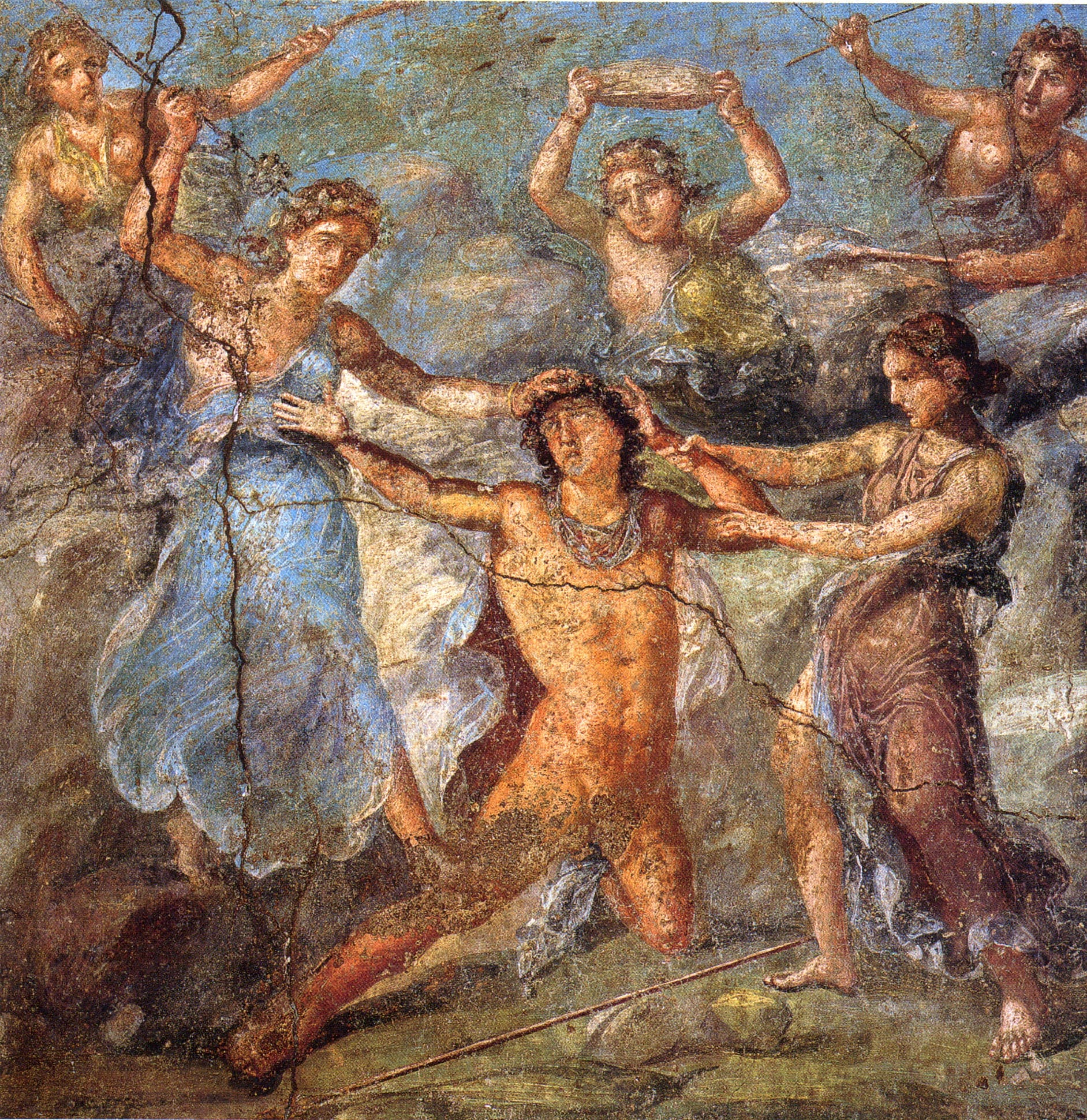
Olympiodorus of Alexandria rightly interprets the myth as representing the descent of unity into multiplicity.[4] Dionysus is the monad of the multitude. The original unity of the world of being is “dismembered” and brought into division. In the Neoplatonic schema, this is the procession – πρόοδος or exitus, in Greek and Latin, respectively – of all things from their primordial cause. In Dionysus, we have all descended into the world of becoming; the god of wine has inebriated us with the spirit of immanence that we too might revel with him in the cosmic dance of becoming and lose ourselves in the immediacy of the world of multiplicity. As descended souls, we have submitted ourselves to the dual lot of all devotees of the twice-born Liberator – joy and sorrow, birth and death, creation and destruction, the perpetual rhythm of all that is subject to becoming.
According to the Orphic legend, Zeus destroyed the Titans with a thunderbolt, reducing them to ashes; and from these ashes, human nature was created. Thereby, man is said to possess a dual nature, at once Titanic and divine, the remains of the Titans having been imbued with the divine soul of Dionysus. The Titanic and the Dionysian simultaneously represent the force of division, multiplicity, and the descent into the world of becoming, but they do so from different points of view. The Titanic is the negative moment of multiplicity, descent as pure negation of the monadic unity, whereas the Dionysian represents the descent of the divine into becoming while always maintaining its ultimate orientation towards its primordial unity.
Dionysus does not desire to negate becoming in his ultimate orientation towards the return to that primordial unity he possessed, nor has he become spiteful on account of his dismemberment and involvement in the lower world, but rather considers it the special province of his providential care. Dionysus wishes to impart his blessing on all of becoming, to embrace it. He would not have it destroyed, but re-enfolded without loss in the primordial unity from which it descended.
It is Christ who came to initiate the return of all things to their Source. Paradoxical though it may seem, Christ likewise represents the nadir of the descent of all things. The divine becomes incarnate in Christ. As Dionysus fell prey to the conspiracy of jealous Hera at the hands of the theicidal Titans, so likewise did Christ find Himself the victim of the Sanhedrin’s conspiracy, which made use of the Roman sword to put Him to death. Christ’s descent, however, differs from that of Dionysus. Christ’s incarnation and descent into the world is not merely mythic and aeonic, but enters into time and space itself, representing the full consummation of Dionysus’ initial descent. Christ’s incarnation and death is the temporal enactment of Dionysus’ pre-eternal descent into the world of becoming.
At the dawn of the manifestation of all things, Dionysus was torn limb from limb. At the end of the descent, not one of Christ’s bones was broken (Ps. 34:20, Jn. 19:36). The Titanic forces of the world, which first mutilated Dionysus’ body, could not violate the integrity of Christ’s. His death is stronger than life, it does not represent the first moment leading to further dissolution and fragmentation. No, Christ’s death represents the dialectical end of the descent. His death is life and resurrection and signals the beginning of the return of all things. St. Paul states as much when he writes: “that in the dispensation of the fulness of times he might gather together in one all things in Christ” (Eph. 1:10).
In every liturgy, the unbroken body of Christ is broken, and in its breaking reconstitutes the unity of all things, that primordial unity of which we all have a share in the Kingdom of Heaven. He calls upon us to remember this unity; after all, the Kingdom of Heaven is not something afar off in some remote future. No, the Kingdom of Heaven is ever present within each of us (Lk. 17:21).
The return of all things to their Source in no wise serves as a negation of becoming. On the contrary, Christ’s gathering up of all things in Himself is His “yes” and “amen” to all that has come to pass. Like Dionysus, He imparts His benediction upon all of becoming. He becomes becoming, uniting in His person the eternal with the temporal, the infinite with the finite, being with becoming.
The return to the Source is not a simple retracing of steps, whereby all of becoming is rendered, essentially, an embarrassing mistake, an unnecessary detour from the divine abode. The going forth of all things is not rendered superfluous after the return. The Good was compelled to diffuse itself, to communicate its being, including in a finite mode; but that same Good desired to call that which is finite to partake in its eternal ground, occasioning the return. In the return, something is, as it were, retained or gained that would not have been had the procession never taken place; nevertheless, that which is gained is discovered to have been its eternal possession.
Therefore, let us neither strive to flee from the world of becoming, as something alien, towards an eternity imagined to be opposed thereto, nor let us neglect our eternal ground, for these two are ever joined in an ineffable, nuptial union. Let us rather always give thanks to our Source and rejoice in the cosmic play, in which Twice-Born Dionysus eternally struts upon the stage.
Finis.
[1] G. P. Xavier, “Jordan Hall’s Dionysian Christianity? (Response to ‘But Why Christianity?’),” YouTube video, 2025,
The video itself is a response to a discussion between Jon Vervake, Jordan Hall, and Johnathon Pageau.
[2] Meister Eckhart, “Counsels on Discernment,” in Meister Eckhart: The Essential Sermons, Commentaries, Treatises, and Defense, trans. Edmund Colledge and Bernard McGinn, Classics of Western Spirituality (Mahwah, NJ: Paulist Press, 1981), 261–62.
[3] In the Middle High German of Eckhart, the term is gelâzenheit (derived from the verb gelâzen, meaning to let go, relinquish, or surrender). In the theology of Eckhart, the term refers, first and foremost, to an absolute spiritual detachment and complete yielding of the self to God’s will. In Modern German, the spelling evolved to Gelassenheit. Heidegger later repurposed the term in his later philosophy to describe “releasement” toward things—a receptive, non-calculative “letting-be” of beings.
[4] Olympiodorus, Commentary on Plato’s Phaedo, ed. and trans. L. G. Westerink (Amsterdam: North-Holland Publishing Company, 1976), 1.3–6.
Thanks for engaging with my video! This piece is magnificent! I've posted my response here:
https://www.youtube.com/watch?v=JAIOeBqp1Hk
There's a succinct summary of my main points in the description.
''he openly states that it is an unfair characterization of Christianity to say that it is in its essence a religion of ressentiment.''
I actually think Xavier is being ovely-charitable to Christianity here if he really thinks Christianity's qualified embrace of life is problematic. Ressentiment and a lack of full-throated life-affirmation are not accidentally related for Nietzsche, they're really the same thing; the weak devalue life because they're weak - this devaluation of life *is* ressentiment. If Christianity isn't based in ressentiment, then it isn't devaluing life, and vice versa, it would seem to me.